Why Jump?
Jumping is one of the simplest yet most dynamic movements a human can perform. The act of jumping engages nearly every part of the body and offers a plethora of benefits to your body throughout your lifespan.
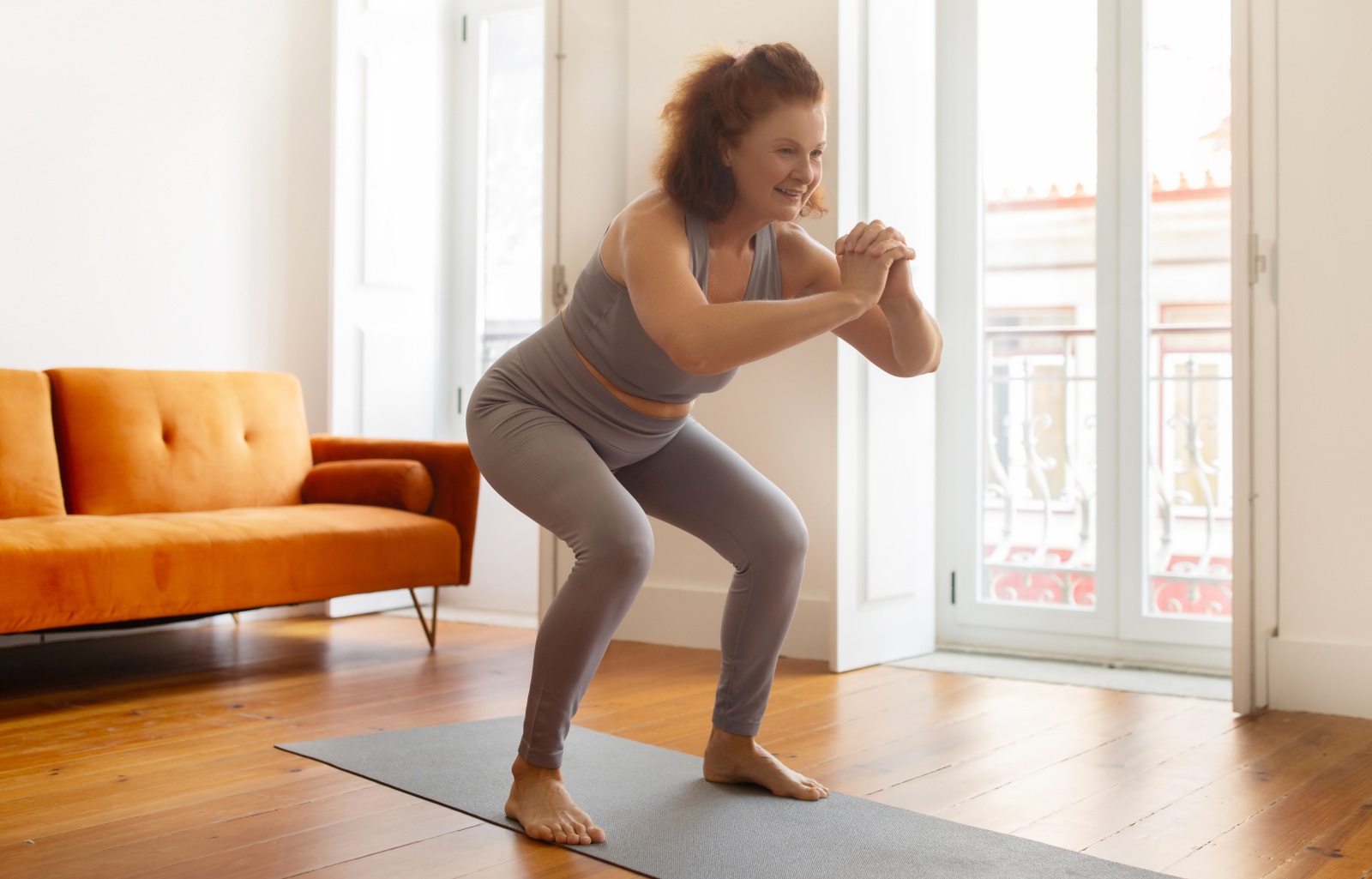
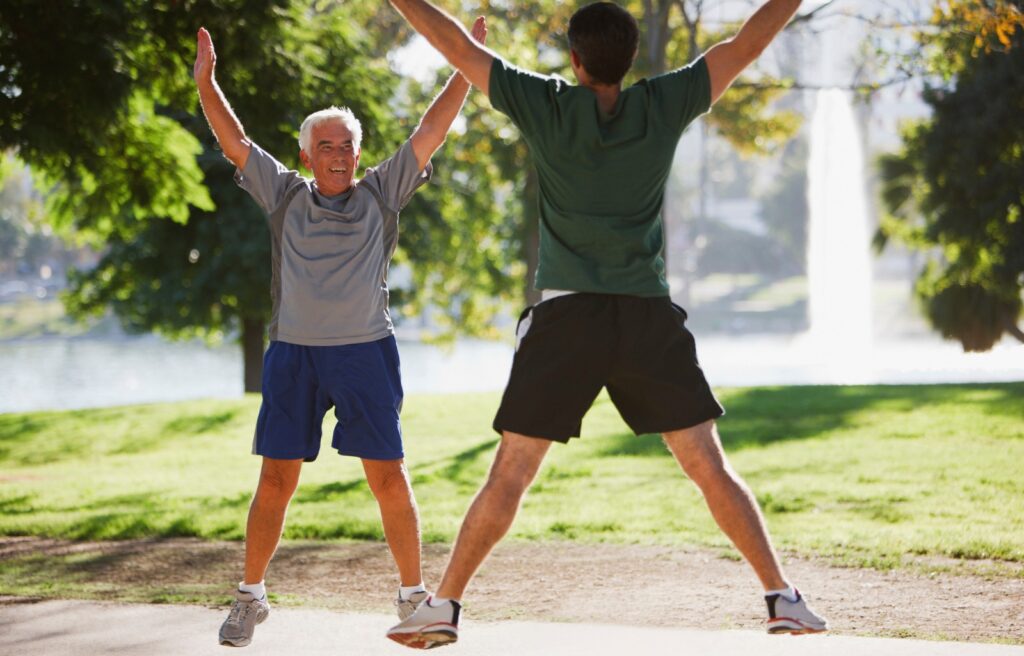
Jump training, also referred to as plyometric training, involves explosive movements such as jump squats, skaters, jumping jacks and burpees. These movements involve rapidly stretching and contracting muscles to build power. They share many benefits with other modalities of exercise (cardiovascular improvement, metabolism support, and weight management, to name a few) but jump training has a significant impact on:
- Bone Density
High impact and load bearing movements stimulate bone strengthening, helping slow age-related bone density loss. Exercises such as walking and resistance training are great forms of regular exercise, but they aren’t enough to build stronger bones. The skeleton becomes accustomed to the loads we routinely subject them to. You have to surprise the bone to stimulate it!
Many studies have shown that exercise programs that integrate jump training with resistance training had a positive effect on both bone mineral density and structural integrity of the bones, effects that were not found with resistance training alone.
- Balance and Muscle Coordination
While your lower body powers the movement of your jump, your brain and nervous system coordinates that sensory input from your inner ear, muscles and joints to keep you balanced mid-air and prepares your body for landing. Continuing to train these dynamic movements improves your overall coordination while practicing the movements, as well as in your day-to-day life. It helps you to maintain agility in your daily movements and may even help to decrease your risk of falling later in life!
Before you start, consider these safety caveats:
While jumping is great for your bone density, balance, muscle coordination and overall health, unfortunately, it is not safe for everyone.
- If you have certain conditions such as osteoporosis, osteopenia, and knee arthritis be sure to check with a doctor before trying jump training. Likewise if you struggle with balance, are new to exercise, or have pain with movement.
- Also, if you have pelvic floor issues like urinary leakage, incontinence, or prolapse, know that jumping can exacerbate your symptoms; a pelvic floor physical therapist can help improve your pelvic floor tone and reduce those symptoms.
How to add jump training into your routine:
If you are at the start of your fitness journey or you haven’t been working out regularly, it is important that you have a few months of resistance training established before you add jump training into the mix. This is to help build the muscle around your hips, knees, and spine since these muscles will absorb some of the impact from your jumps so the joints aren’t getting unnecessarily stressed.
- Once you have established your resistance training routine, start small. Add jump training 1-2 days per week. You don’t need long jumping workouts or giant jumps to start seeing results. Begin with as few as 5-10 jumps per session.
- Try movements that you can do with great form and control confidently without jumping, such as a squat to a heel raise or stepping jack and try a rep or two with a small jump, focusing on stable and controlled landings.
- As your strength, coordination and confidence with the movements improve, consider slowly increasing the number of jumping reps relative to the non-jumping variation of the movement. Once you are comfortable doing 20-40 reps of the movement, slowly increase the height or intensity of the jump.
- Again, you can do this a couple reps at a time; it does not need to be an all-or-nothing progression! Excessive jumping on hard surfaces or without proper conditioning can lead to overuse injuries, so take your time easing into new movements and listen to your body.
- Finally, be sure to wear supportive footwear to help minimize risk while maximizing the benefits that just might make you want to jump for joy!
References:
Amenabar T. What happens to your body when you jump. The Washington Post. September 14, 2025 [April 5, 2026] https://www.washingtonpost.com/wellness/2025/09/14/jumping-bone-density-exercise/
Kato T, Terashima T, Yamashita T, Hataanaka Y, Honda A, Umemura Y. Effect of low-repetition jump training on bone mineral density in young women. J Appl Physiol (2006) 100: 839-843.
McCoy, Jenny. 5 Jumping Exercises to Help You Age Better and Live Longer. SELF. December 3, 2025 [April 5, 2026] https://www.self.com/story/jumping-exercises-for-longevity
Stiepan, DeeDee. Mayo Clinic Minute: Landing a jump properly prevents injury. July 27, 2021 [April 5, 2026] https://newsnetwork.mayoclinic.org/discussion/mayo-clinic-minute-landing-a-jump-properly-prevents-injury/
Zhao R, Zhao,M, Xu Z. The effects of differing resistance training modes on the preservation of bone mineral density in postmenopausal women: a meta-analysis. Osteoporos Int. (2015) 26:1605-1618.
Zhao, R, Zhao M, Zhang L. Efficiency of jumping exercise in improving bone mineral density among premenopausal women: a meta-analysis. Sports Med (2014) 44: 1393-1402.