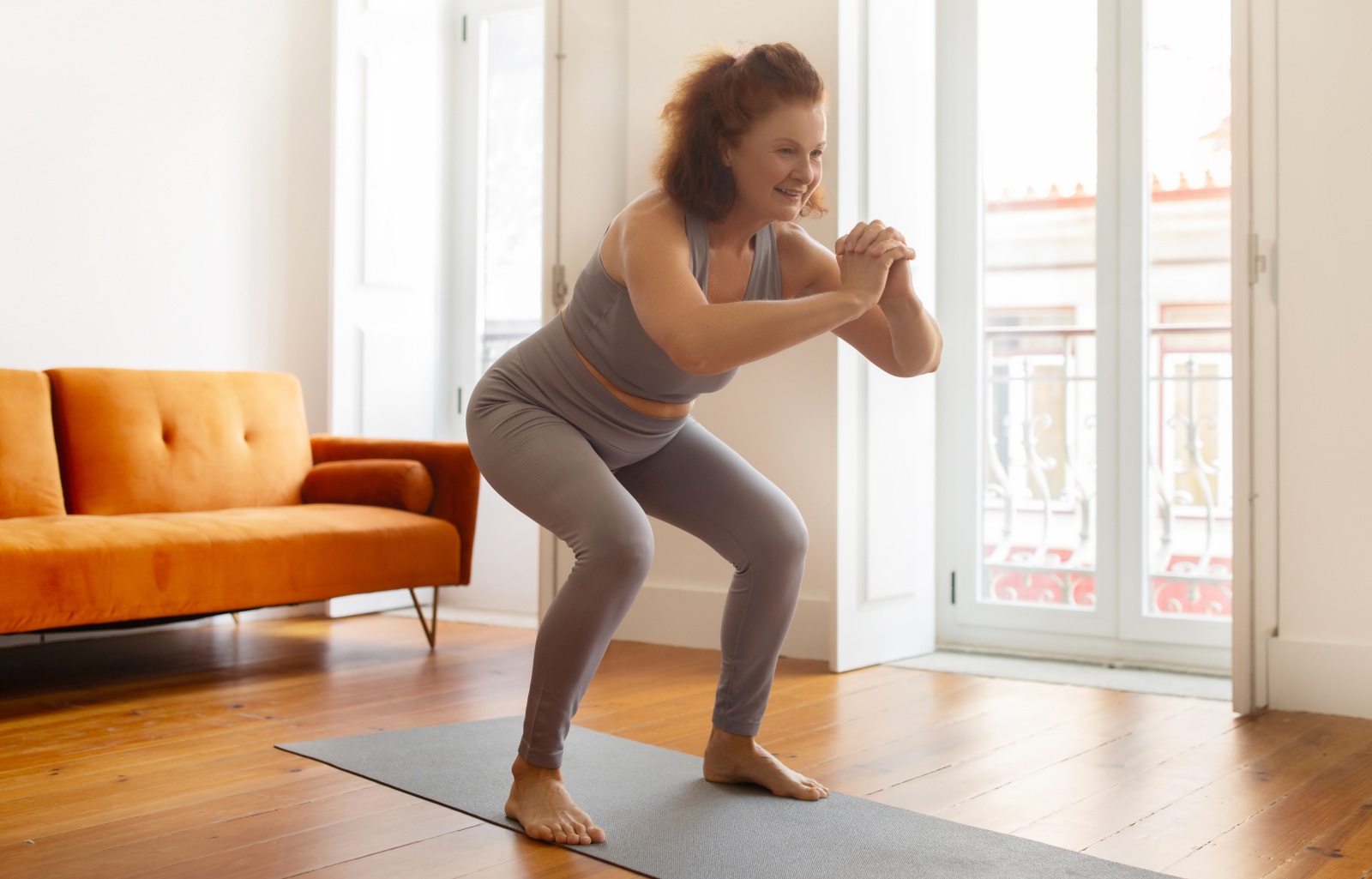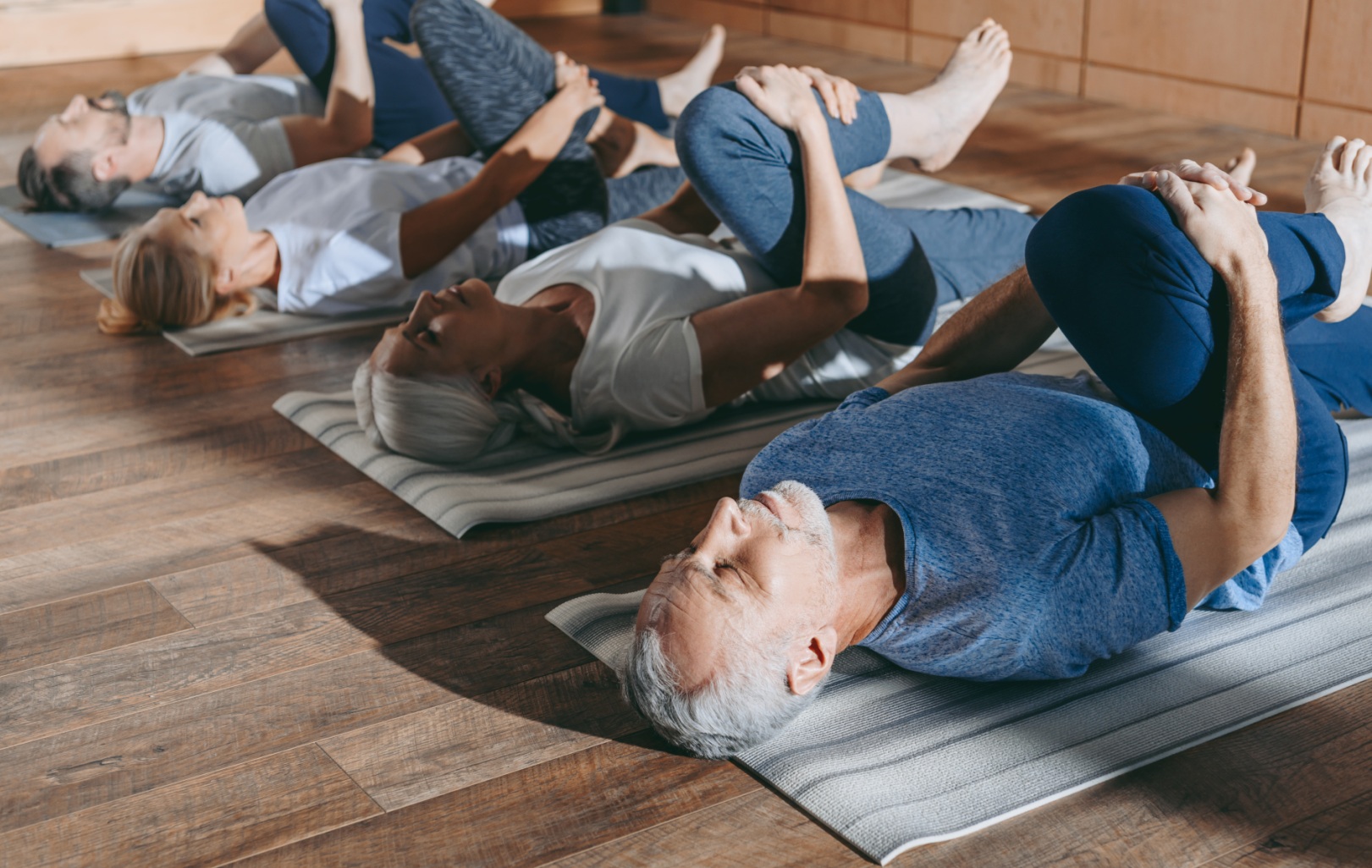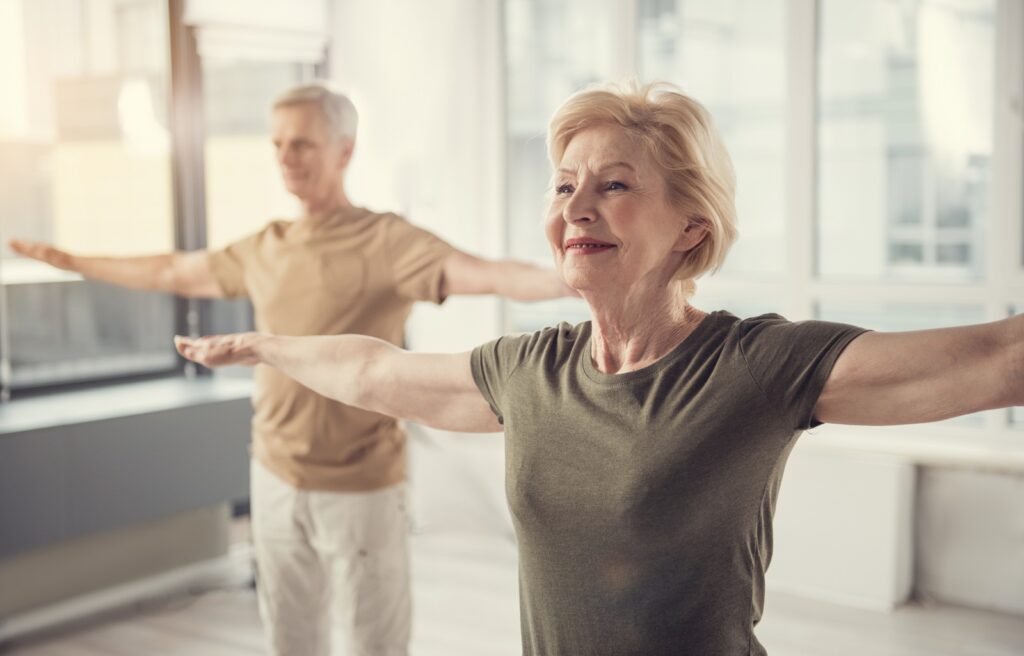
Mobility is one of the most important foundations of senior fitness, yet it is often overlooked in favor of strength or cardiovascular exercise.
Mobility refers to the ability to move joints freely and comfortably through their full range of motion while maintaining control and balance. For older adults, good mobility directly impacts independence, confidence, and overall quality of life. Simple daily movements – getting out of bed, climbing stairs, reaching into a cupboard, or taking a walk – are all easier and safer when mobility is maintained.
As we age, it is natural for joints to become stiffer and muscles to lose elasticity. Long periods of sitting, reduced activity levels, arthritis, and previous injuries can further limit movement. When mobility declines, people often compensate by moving less, which creates a cycle of increasing stiffness and weakness. Over time, this can contribute to poor posture, balance problems, and a higher risk of falls. Prioritizing mobility training helps break this cycle and supports healthy movement patterns.
One of the biggest benefits of mobility-focused exercise for seniors is fall prevention. Falls are a leading cause of injury among older adults, and many are related to limited ankle, hip, or spinal mobility combined with poor balance. Improving joint movement and body awareness allows seniors to react more effectively to changes in terrain, recover from a stumble, and move with greater stability. Mobility training also supports smoother, more confident walking, which is essential for staying active and independent.
Mobility work does not need to be intense or complicated to be effective. In fact, gentle, controlled movements performed consistently are often the most beneficial. A well-rounded senior mobility routine typically includes joint mobility, light stretching, balance work, and functional strength. These elements work together to keep the body moving efficiently and pain-free.
Simple exercises can make a meaningful difference.
Chair sit-to-stands, for example, strengthen the legs and hips while reinforcing a movement pattern used many times throughout the day. This exercise supports independence by making it easier to rise from chairs, beds, and toilets. Ankle circles and heel raises improve ankle mobility and lower-leg strength, which are crucial for balance and safe walking. Healthy ankles help seniors navigate uneven surfaces and reduce the risk of tripping.
Seated or standing torso rotations are another valuable mobility exercise. These gentle rotations maintain spinal flexibility and make it easier to turn, reach, and look over the shoulder. Shoulder rolls and arm raises help preserve shoulder mobility for everyday tasks such as dressing, reaching overhead, or carrying groceries. Marching in place, with or without holding onto a chair, encourages hip mobility, coordination, and balance while mimicking the walking motion.
Balance-focused mobility exercises are especially important for seniors. Simple weight shifts, standing on one foot while holding a support, or heel-to-toe walking can improve body awareness and stability. These exercises train the nervous system to respond more effectively to changes in position, which is essential for preventing falls. Even practicing balance for a few minutes a day can lead to noticeable improvements over time.
When starting a mobility routine, safety and comfort should always come first.
Movements should be slow, controlled, and pain-free. Using a chair, wall, or countertop for support can help build confidence and reduce fear of falling. Breathing naturally and avoiding forced stretches are also key principles. Mobility training is not about pushing through discomfort but about encouraging smooth, relaxed movement.
Consistency matters more than duration. Mobility exercises can be performed in as little as 10 to 15 minutes per session and repeated three to five times per week, or even daily. Many seniors find it helpful to integrate mobility into their morning routine or use it as a warm-up before walking or other forms of exercise. Over time, these small, regular efforts add up to meaningful improvements in movement and comfort.
Ultimately, senior fitness mobility is about preserving freedom and independence. Maintaining the ability to move well allows older adults to continue doing the activities they enjoy, from playing with grandchildren to traveling, gardening, or simply moving through daily life with confidence. By focusing on mobility, seniors invest in long-term health, resilience, and a better quality of life—one gentle movement at a time.
Here are a few examples to get started:
- Chair sit-to-stands: Strengthens the legs and improves the ability to get up from chairs or toilets independently.
- Ankle circles and heel raises: Improve ankle mobility and balance, helping reduce fall risk while walking.
- Seated or standing torso rotations: Maintain spinal mobility for easier turning and reaching.
- Shoulder rolls and arm raises: Keep the shoulders flexible for daily tasks like dressing or reaching overhead.
- Marching in place (holding a chair if needed): Enhances hip mobility and coordination while reinforcing balance.
These movements are gentle, effective, and easy to adapt, making them ideal for seniors at any fitness level.