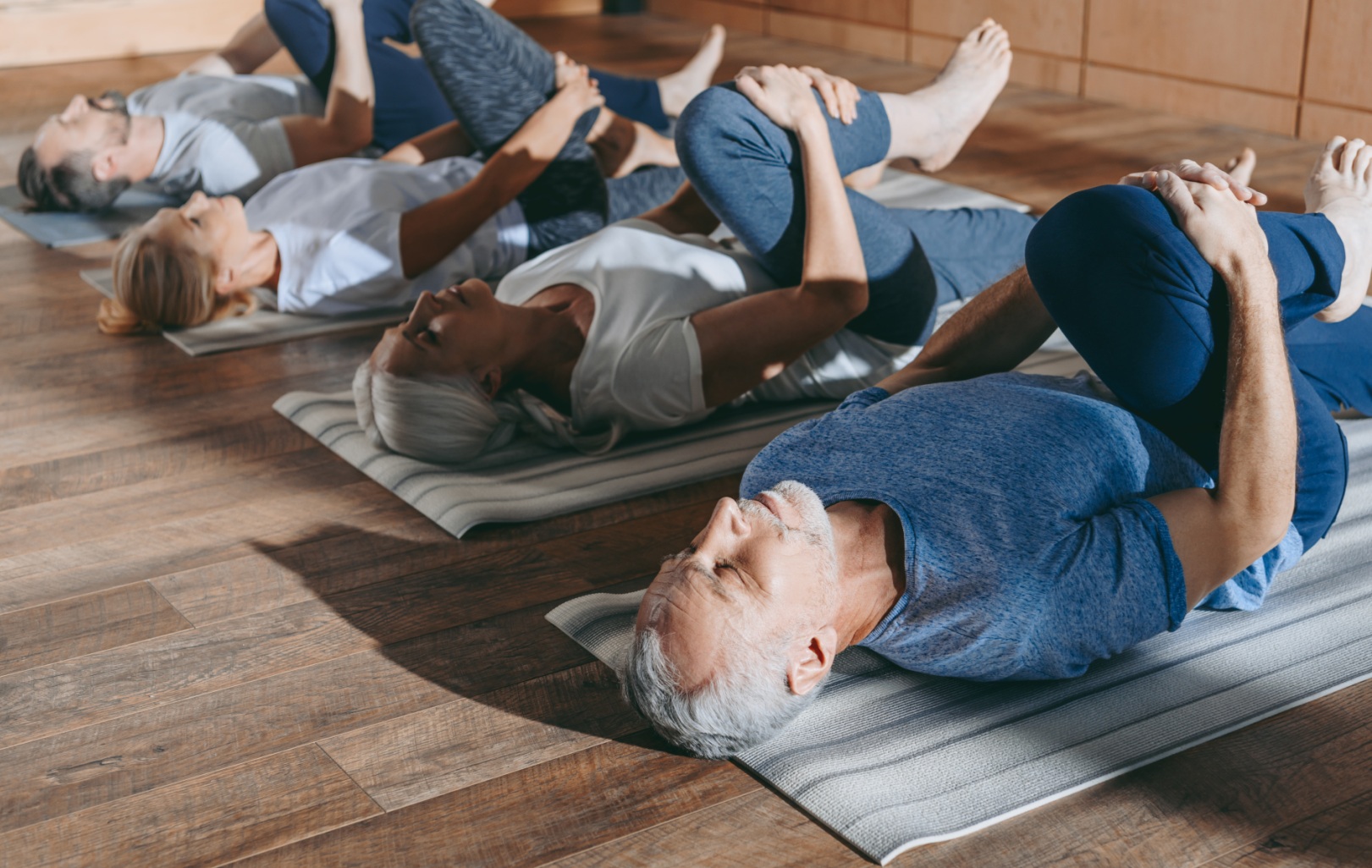
As adults age, natural changes in muscles, joints, and connective tissue gradually reduce flexibility and mobility. While this decline is normal, it can significantly affect daily life – making it harder to bend, reach, walk comfortably, or maintain balance. One of the most effective and accessible ways for older adults to counteract these changes is through regular stretching. Stretching supports physical function, helps prevent injuries, and enhances overall well-being.
Below are four evidence-based reasons why stretching is especially important for seniors, along with examples of gentle stretches that support long-term health.
1. Stretching Helps Maintain Flexibility and Range of Motion
Aging causes tendons and muscles to lose elasticity, leading to stiffness and decreased mobility. According to the Mayo Clinic, regular stretching increases the elasticity of muscles and connective tissues, helping maintain the range of motion necessary for daily activities such as dressing, stepping into a bathtub, or reaching overhead for household items (Mayo Clinic Staff).
Research also shows that flexibility exercises play a significant role in preventing functional decline by preserving joint mobility and reducing age-related stiffness. Even simple movements – such as a seated hamstring stretch or gentle side-bending stretch – can help older adults keep their muscles lengthened and reduce the risk of limited mobility later in life.
2. Stretching Improves Balance and Reduces Fall Risk
Falls are a leading cause of injury among older adults. The Centers for Disease Control and Prevention notes that each year, there are about 1 million fall-related hospitalizations among older adults (CDC).
Poor flexibility, especially in the ankles, hips, and calves, is associated with decreased balance and reduced gait stability. Structured stretching programs can improve walking performance and gait mechanics in older adults, contributing to safer movement patterns and better balance (Salse-Batán). Gentle stretches – such as ankle circles, wall-assisted calf stretches, and hip-flexor step-backs – help improve lower-body mobility and step length. This reduces the risk of tripping and supports stronger, more controlled movement.
3. Stretching Reduces Stiffness and Joint Pain
Many seniors experience stiffness, soreness, or chronic joint pain due to osteoarthritis, inflammation, or natural age-related wear. Stretching helps relieve these symptoms by improving circulation, reducing muscle tension, and increasing synovial fluid movement around the joints. The National Institute on Aging highlights that flexibility exercises can help manage arthritis symptoms by reducing stiffness and promoting easier movement (National Institute on Aging).
For example, seated figure-4 stretches, seated spinal twists, and chest-opening stretches help alleviate lower-back and hip tension—areas commonly stiff in older adults. By keeping the muscles around the joints supple, stretching helps reduce stress on the joints themselves, easing discomfort and supporting long-term joint health.
4. Stretching Enhances Circulation and Overall Well-Being
Improved circulation is one of the lesser-known but highly beneficial effects of stretching. By increasing blood flow to muscles and joints, stretching delivers oxygen and nutrients to tissues and helps reduce the sensation of stiffness. Good circulation also assists with recovery and can enhance energy levels. “Stretching enhances circulation, improving the delivery of nutrients and oxygen to muscles and joints. This increased blood flow can also reduce muscle soreness and speed up recovery time” (UC Davis Health).
Many seniors also report that stretching helps them to feel more relaxed and limber. Gentle movement combined with deep breathing can reduce stress, improve mental clarity, and support better sleep – important aspects of healthy aging.
Examples of Safe, Gentle Stretches for Seniors:
The following movements are ideal for beginners and can be performed daily:
- Seated hamstring stretch – lengthens the backs of the legs and reduces lower-back strain.
- Standing calf stretch – improves gait and balance.
- Seated figure-4 stretch – loosens hips and reduces sciatic tension.
- Hip-flexor step-back stretch – counteracts tightness from prolonged sitting.
- Ankle circles – enhance mobility which is important for balance.
- Seated spinal twist – improves back mobility.
- Chest opener – promotes better posture.
- Shoulder rolls – ease neck and shoulder tension.
- Side-bending stretch – increases core and rib mobility.
- Wall-assisted back stretch – relieves upper-back tightness.
Conclusion
Regular stretching is one of the simplest and most effective tools seniors can use to maintain independence, prevent injury, and support physical comfort. By dedicating just a few minutes each day to flexibility exercises, older adults can significantly improve their mobility, reduce stiffness, and enhance their quality of life. Stretching is low-impact, accessible to nearly everyone, and easily adapted to individual ability levels – making it an essential component of healthy aging.
Resources:
CDC. “Facts About Falls.” Older Adult Fall Prevention, 9 May 2024, https://www.cdc.gov/falls/data-research/facts-stats/?CDC_AAref_Val=https://www.cdc.gov/falls/facts.html.
Mayo Clinic Staff. “Stretching: Focus on flexibility.” 18 November 2023, https://www.mayoclinic.org/healthy-lifestyle/fitness/in-depth/stretching/art-20047931.
National Institute on Aging. “Osteoarthritis | National Institute on Aging.” National Institute on Aging, 15 November 2022, https://www.nia.nih.gov/health/osteoarthritis/osteoarthritis.
Salse-Batán, Jorge. “Effects of stretching exercise on walking performance and balance in older adults: A systematic review and meta-analysis.” Pub Med, 28 December 2024, https://pubmed.ncbi.nlm.nih.gov/39733629/.
UC Davis Health. “How to improve your stretching and flexibility for better health | Cultivating Health.” UC Davis Health, 11 October 2024, https://health.ucdavis.edu/blog/cultivating-health/how-to-improve-your-stretching-and-flexibility-for-better-health/2024/10.