The Spine – Your body’s “main mast”
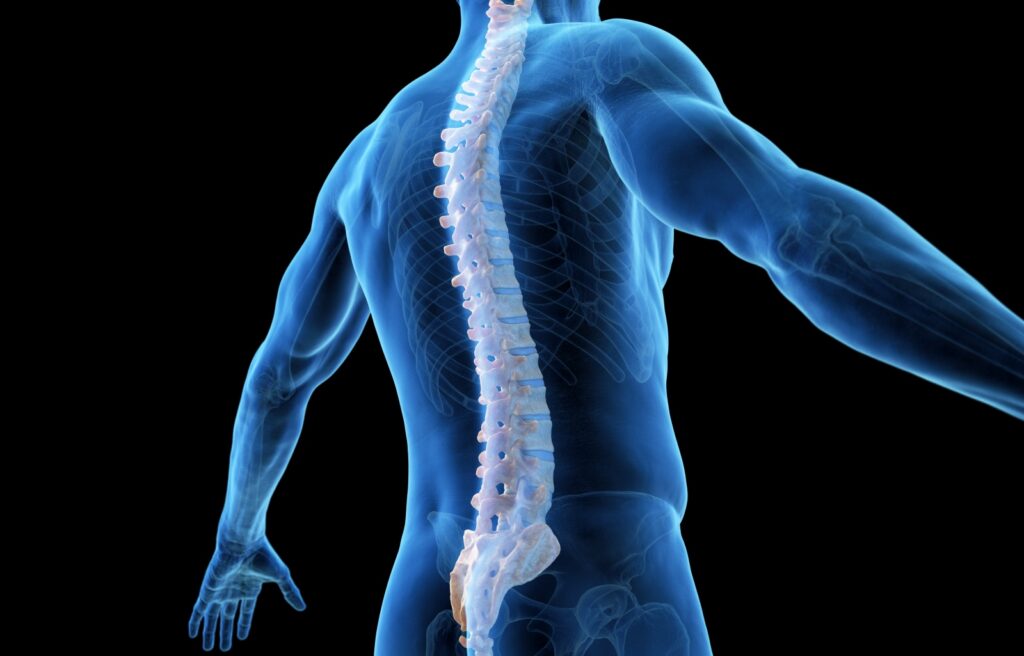
The human spine – or vertebral column – is a marvel of biological engineering. It’s not just a single bone, but a complex chain of 33 individual bones (vertebrae) stacked to provide a perfect balance of rigidity for support and flexibility for movement. Think of it as your body’s “main mast”: it protects the spinal cord, supports your head, and serves as the primary attachment point for your ribs and muscles.
The Structure – What is it made of?
The bones: The vertebral column is made up of a series of vertebra that have similar yet unique features depending on which level of the spine they are located. There are 33 bones in the spine (26 that move in the adult spine). There are 7 cervical, 12 thoracic, 5 lumbar and 9 sacral-coccyx bones (5 sacrum and 4 coccyx – which are fused into 2 bones in adults).
The saying, “Breakfast at 7, lunch at 12, dinner at 5 and snack at 9 is a simple way to recall the numbers.
The joints: The vertebra, through facet joints, interact with each other over the length of the spine and with the skull (cervical) and pelvis (sacrum) on the top and bottom. The facet joints are small, synovial joints that have cartilage, synovial fluid and joint capsules like many other joints in the body.
The muscles: The primary muscles of the spine are the erector spinae. This group of long muscles runs in 3 segments from the base of the spine to the base of the skull. They perform what their name suggests – they hold the spine erect. In other words, whenever we are sitting up or standing up they are working. Of equal importance for spinal stability and integrity, are the abdominal muscles. There are four layers (from superficial to deep): the rectus abdominis – the “6 pack muscles”, the external and internal obliques – the “twisting muscles”, and the transverse abdominis or “TVA” – the “weight belt muscle”.
The Function – How does it work?
The individual vertebra and each vertebral disc are stacked in a curvilinear fashion to provide the length/height of the spine. Think of a stack of toy blocks with jelly doughnuts in between them. You don’t want the jelly to bulge or squirt out!
The facet joints of the vertebra run in pairs down the entire spine on each side and allow for motions of the spine. The orientation of the facet joints dictates how that facet joint will allow motion. For example, their orientation in the lumbar spine allows flexion-extension allowing us to bend forward and backwards. The facets in the thoracic region (rib cage) accommodate rotation giving us a twisting motion. There is also some flexion-extension that is most commonly demonstrated by poor posture, i.e. slouching. The facet joints and structure of the cervical spine are very unique and accommodate rotation (turning our heads, i.e. shaking “no”), side bending (tipping are heads towards our shoulders) and bending forward and back (nodding “yes”).
The intervertebral discs separate each of the vertebra (except at the C1-C2 level) and act as spacers and shock absorbers. They are formed of a thick rubber ring with a fluid nucleus (like jelly doughnuts). Many cases of back issues and pain involve the discs and then, secondarily, the muscles.
The Muscles – What do they do?
Each of the muscles perform specific movements. The erector spinae muscle group, along with other secondary groups, helps to control the postural position and movement of the spine. In addition, the muscles provide dynamic support to the ligaments and other connective tissues of the spine. The abdominal muscles, the muscles that cover the span from the ribs to the pelvis, when trained and functioning properly, can reduce the pressure on the low back by as much as 50%! There are many other small muscle groups that carry out various movements and functions along the length of the spine. These – and the large muscle groups – tend to be trained best by performing stability exercises and using stability training tools like the stability/fitness ball.
The Exercises – How to stabilize and strengthen the spine
Stabilizing exercises
These are exercises that improve the ability to hold still. Effective tools and exercises to stablize the spine include the stability ball, Bosu, and performing most strength training exercises in a standing position. Here are some of examples of back and core stabilizing exercises:
Stability ball bridge – on your back, arms out, palms up; legs straight, ball under your ankle/heel
Bosu and/or stability ball pushups – pushup with hands on floor, feet on Bosu/ball or pushup with hands on Bosu/ball, feet on floor
Remember: “Stability before mobility; If you can’t hold still, you’re not ready to move!”
Dynamic exercises and primary muscles
Back extension – back extension on Bosu/ball; back extension on various back extension exercise stations
Deadlift – performed with dumbbells, kettlebells and various types of bars
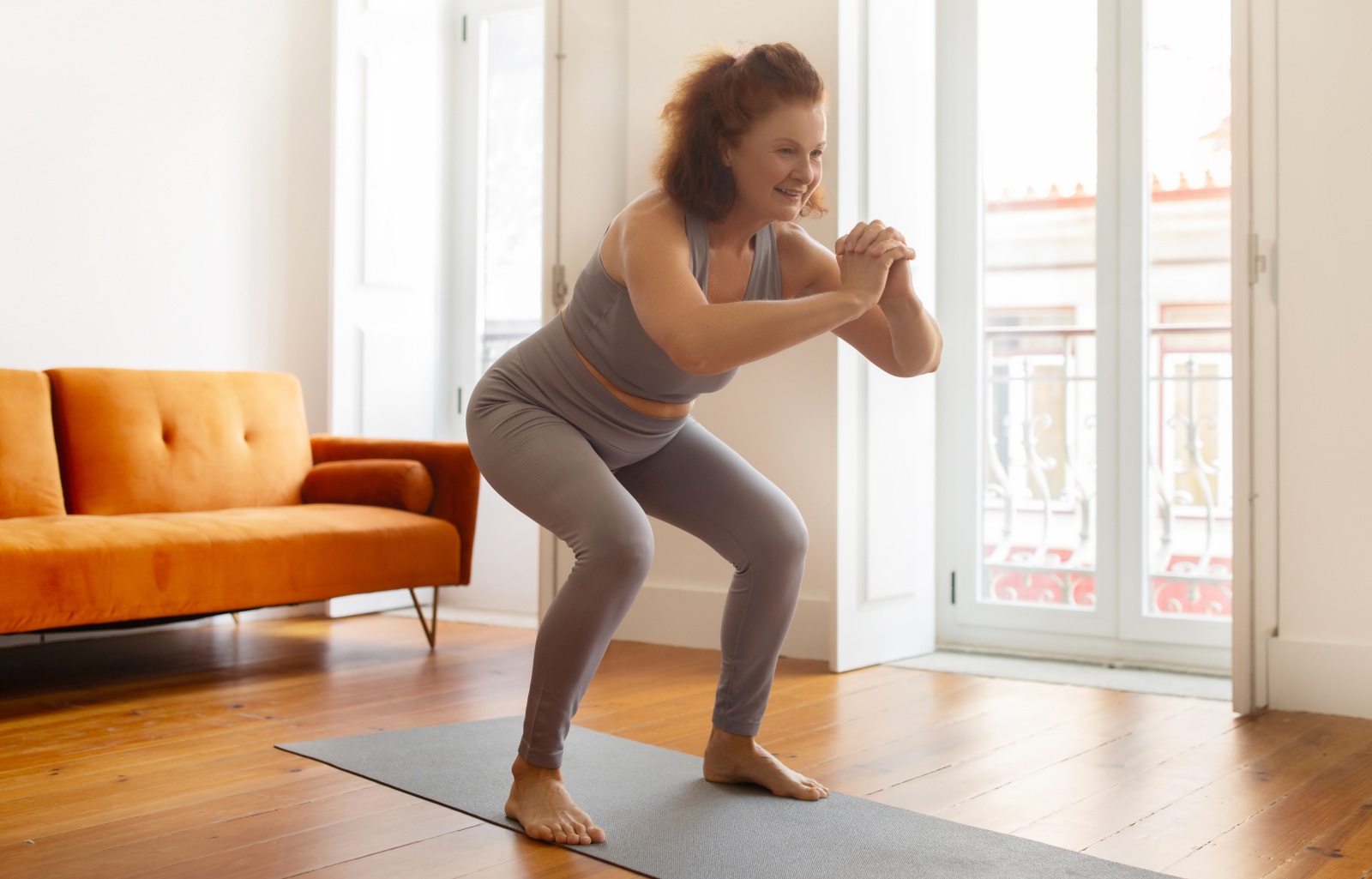
Squat – performed with dumbbells, kettlebells and various types of bars
Goblet squat – performed with a kettlebell or a dumbbell
Ab exercises
Your abs are the “spine of your front”. They provide a huge amount of support to your spine. They’re not there for show!
Plank – on the floor or stability ball or Bosu
Crunches – on stability ball or Bosu – not recommended on the floor due to hyper flexion of the spine
Leg lowering – start with your legs high and lower them. Don’t do leg “lifts”! The intensity is greatest when legs are low. Starting on the floor and lifting is like starting a new exercise on a machine with the weight at the heaviest level!
Standing exercises
Many standing exercises that challenge posture and spinal position will help to improve functional strength. For example: chest press or rowing on the Cable Cross; twist/rotation, Standing biceps curls, shoulder press, low-to-high/high-to-low diagonal “wood chops” and many more!